
Quick answer: Deodorant fights odor. Antiperspirant reduces sweat. Whole-body deodorant is a deodorant made for areas beyond your armpits, like the groin, feet and under the breasts. The American Cancer Society says there is limited evidence that antiperspirants raise breast cancer risk, so for most people aluminum-free is a preference, not a safety need.
Whole-body deodorant is having a moment. Unilever reported that Google searches for it rose more than 1,000% between March 2023 and March 2024, and the shelves have filled up fast. The labels, though, rarely explain the basics: what each product does, and which one you need.

This guide clears it up in a few minutes, with picks for every need.
| Pick | Best For | |
|---|---|---|
| Native Sensitive Deodorant | Sensitive armpits | Check Price → |
| Lume Whole Body Deodorant | Odor control beyond the armpits | Check Price → |
| Dove Men+Care Whole Body Deo | Odor plus chafing | Check Price → |
| Degree Whole Body Deodorant | Long-lasting freshness | Check Price → |
| Old Spice Whole Body Deodorant | A simple, short formula | Check Price → |
Deodorant vs antiperspirant: what each one does
They sit side by side on the shelf, but they do different jobs.
- Deodorant targets odor. It uses fragrance, ingredients that slow odor-causing bacteria, or ingredients that adjust skin pH. It does not stop sweat.
- Antiperspirant reduces sweat. Aluminum salts form temporary plugs in your sweat ducts. In the US it is an over-the-counter drug, which is why the label has a Drug Facts box.
- Whole-body deodorant is a deodorant, usually aluminum-free, labeled for use beyond the armpits.
| Deodorant | Antiperspirant | Whole-body deodorant | |
|---|---|---|---|
| Main job | Reduces odor | Reduces sweat | Reduces odor beyond the armpits |
| Key ingredients | Fragrance, antibacterials, pH adjusters | Aluminum salts | Mandelic acid, magnesium compounds, starches |
| Regulated as | Cosmetic | OTC drug | Cosmetic |
| Stops sweat? | No | Partly: at least 20% less, by FDA rule | No |
| Best for | Odor, light sweat | Heavy sweat, wet patches | Groin, feet, skin folds |
The FDA rule is specific: a product must cut sweat by at least 20% to be sold as an antiperspirant, and 30% to claim “extra effective” (21 CFR Part 350).
Why you smell: fresh sweat barely has an odor
You have two main types of sweat glands.
- Eccrine glands cover most of your body. Their sweat is mostly water and salt, and it cools you down.
- Apocrine glands sit mainly in the armpits and groin. Their sweat contains fats and proteins.
Odor starts when skin bacteria break down apocrine sweat. Researchers at the University of York found that one species, Staphylococcus hominis, is especially good at this. It produces thioalcohols, compounds with an onion-like smell even in tiny amounts (University of York).
That is why your arms or back rarely smell, even when they sweat. Feet are the exception: they sweat a lot, and shoes trap the moisture bacteria need.
Is aluminum in antiperspirant safe?
Breast cancer. The American Cancer Society concluded there is limited evidence that antiperspirants increase breast cancer risk. A well-designed study of about 800 women with breast cancer found no link to antiperspirant use, deodorant use or underarm shaving (American Cancer Society).
Alzheimer’s disease. This worry traces back to studies from the 1960s that later research could not replicate. The Alzheimer’s Association has said the research community is generally convinced aluminum is not a key risk factor (International Hyperhidrosis Society).
Kidney disease. This is the one real caution. FDA requires antiperspirant labels to say “Ask a doctor before use if you have kidney disease.” The National Kidney Foundation says this applies to people with kidney function at 30% or less (National Kidney Foundation).
The bottom line: for healthy adults, aluminum-free is a choice, not a requirement. Pick an antiperspirant if sweat bothers you, and a deodorant if odor is your only concern.
PureForm Ingredient Check
Aluminum chlorohydrate
What it is: An aluminum salt, the most common antiperspirant active.
Primary function: Forms temporary plugs in sweat ducts to reduce sweating.
Evidence: Reliably reduces sweat. Cancer research groups have not found that it causes cancer.
Considerations: Can sting freshly shaved skin. People with advanced kidney disease should ask a doctor first.
Marketing reality: “Aluminum-free” is a preference claim, not proof of a safer product.
What aluminum-free deodorants use instead
Aluminum-free formulas control odor in three main ways: neutralizing it, lowering skin pH so bacteria grow more slowly, or absorbing moisture.
PureForm Ingredient Check
Baking soda (sodium bicarbonate)
Primary function: Neutralizes odor.
Evidence: Healthy skin is mildly acidic, around pH 4.7 (Lambers et al., 2006). Baking soda is alkaline.
Considerations: Some people get red, itchy armpits from it. If that is you, choose a baking soda-free formula.
Marketing reality: “Natural” does not always mean gentler.
Magnesium compounds such as magnesium oxide and magnesium hydroxide are the go-to swap in sensitive formulas. They control odor without the sting some people get from baking soda.
Native Sensitive Deodorant
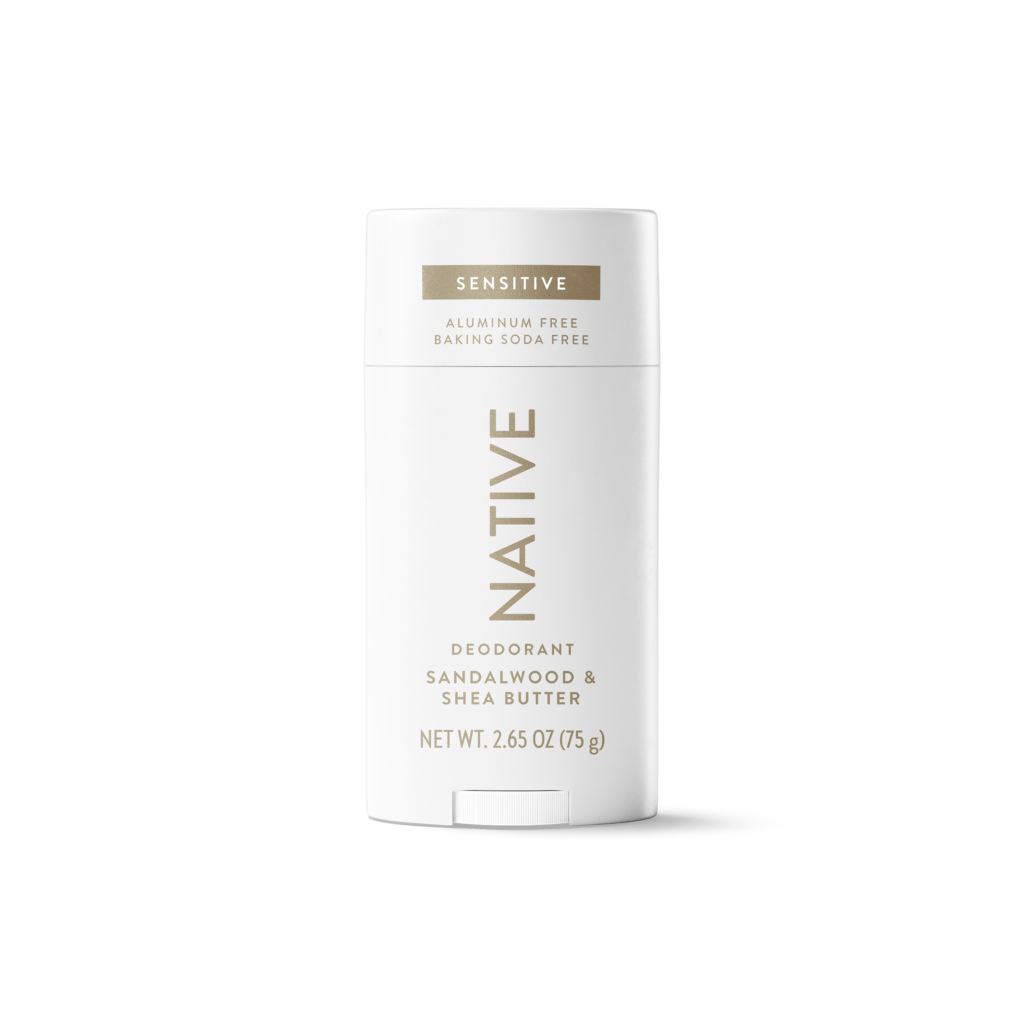
Native’s Sensitive line drops baking soda and uses magnesium oxide for odor control, with coconut oil and shea butter for a smooth glide. It is aluminum-free and comes in several light scents. Note that Native’s classic line does contain baking soda, so pick the Sensitive version if your armpits react easily (Native).
What we like: Baking soda-free, aluminum-free, moisturizing base, easy to find.
PureForm Ingredient Check
Mandelic acid
What it is: An alpha hydroxy acid (AHA).
Primary function: Lowers skin pH, which slows the bacteria that cause odor.
Why brands use it: It targets the cause of odor instead of covering it with fragrance.
Considerations: Can sting on freshly shaved or irritated skin.
Marketing reality: The pH logic is sound. Long-lasting claims such as 72 hours come from brand testing.
Lume Whole Body Deodorant
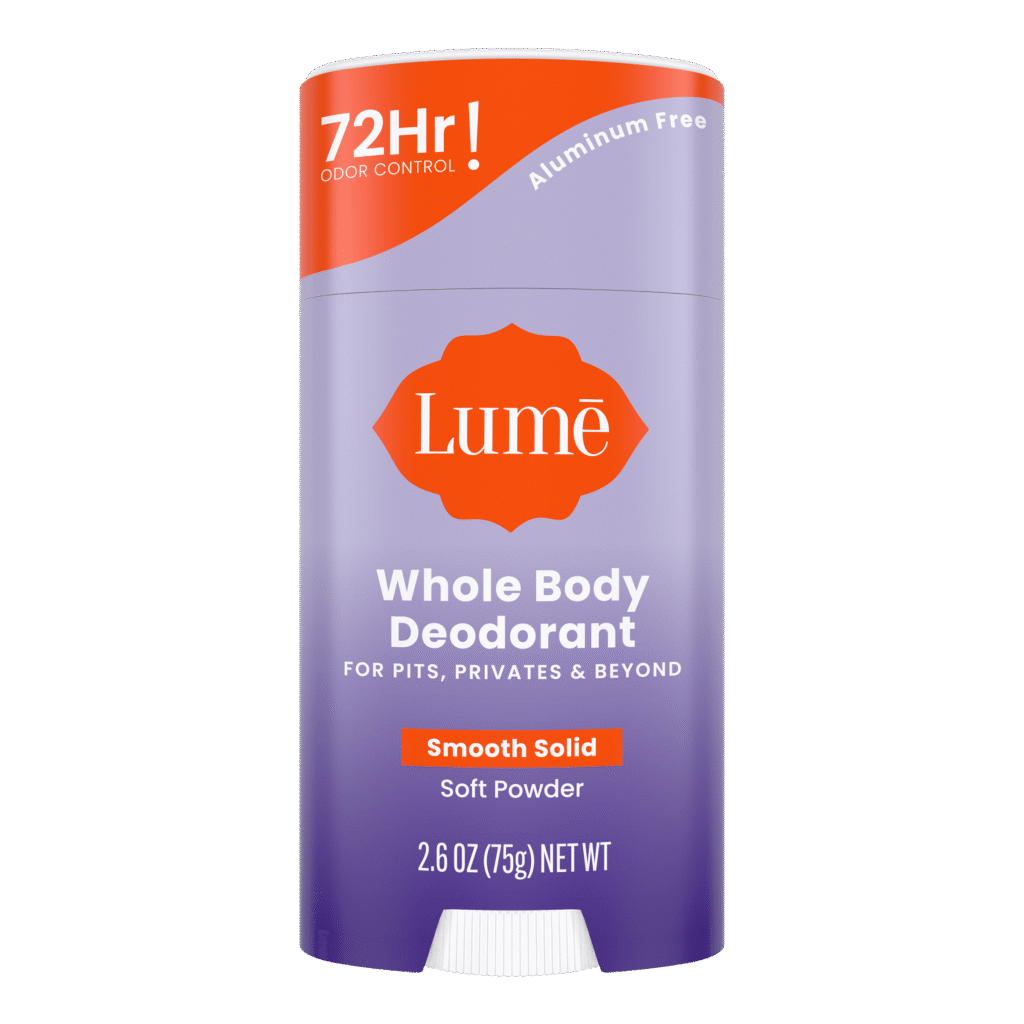
Lume built its line around mandelic acid and designed it for use from armpits to feet and other external areas. It is aluminum-free and baking soda-free, and the brand says it controls odor for up to 72 hours. If you also want sweat control, Lume sells a separate Sweat Control line that contains aluminum (Lume).
What we like: Targets odor at the source, made for whole-body use, unscented and scented options.
Do you need whole-body deodorant?
Not everywhere. As one dermatologist told CNN, “We don’t stink everywhere.” Most of your body has eccrine sweat, which doesn’t smell much on its own (CNN).
Where it does help:
- Groin and inner thighs: apocrine glands, plus friction and trapped moisture.
- Feet: heavy sweat inside closed shoes.
- Under the breasts and in skin folds: warm, damp skin where odor and chafing build up.
Use it on external skin only. Antibacterial ingredients near the vagina can upset its natural balance, and freshly shaved or broken skin may sting.
Dove Men+Care Whole Body Deo
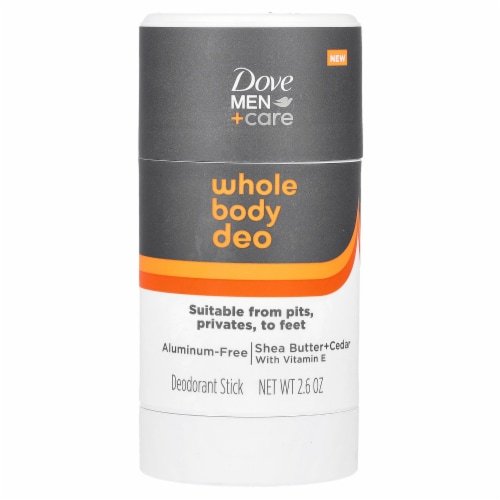
Dove’s whole-body line is aluminum-, baking soda-, talc- and paraben-free and comes as a stick, spray or cream. The stick doubles as an anti-chafe balm for inner thighs, which makes it a smart pick for runners and hot days (Unilever).
What we like: Odor control and chafe protection in one, several formats, budget-friendly.
Degree Whole Body Deodorant
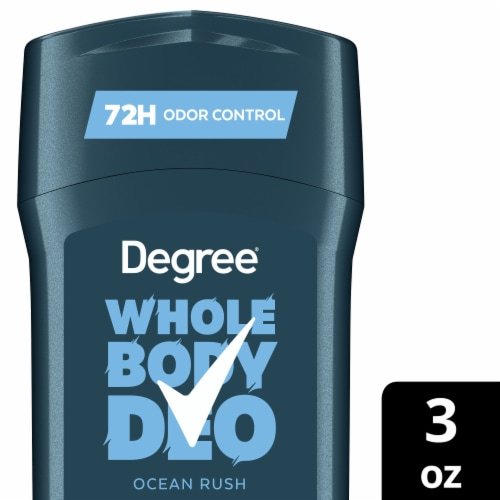
Degree’s aluminum-free whole-body range comes in sticks and sprays, and the brand claims up to 72 hours of odor protection. The spray is handy for feet and hard-to-reach spots (Degree).
What we like: Stick and spray options, several scents, easy to find in stores.
Old Spice Whole Body Deodorant
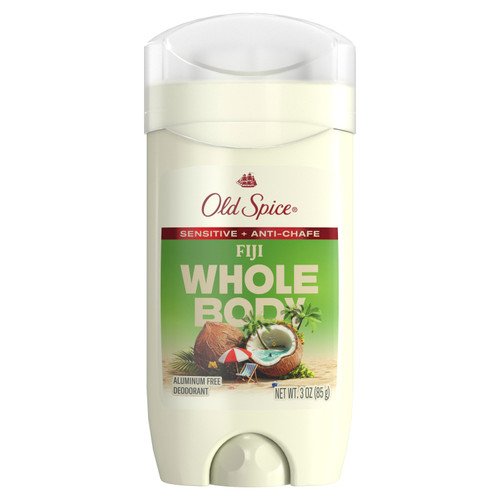
Old Spice keeps its whole-body stick short and simple, with fewer than 10 ingredients and no aluminum. The brand advises waiting before applying to freshly shaved skin (Old Spice).
What we like: Short ingredient list, aluminum-free, classic Old Spice scents.
If sweat is your main concern, choose an antiperspirant instead. Apply it at night to clean, dry skin, when sweat glands are less active, so it has time to work.
Four myths to drop
- “Aluminum-free deodorant stops sweat.” It doesn’t. Only an antiperspirant reduces sweat.
- “Natural deodorant is always gentler.” Baking soda and essential oils are common irritants.
- “Unscented means fragrance-free.” Not always. FDA notes that some unscented products contain fragrance to mask other smells (FDA).
- “You need an armpit detox when you switch.” Your liver and kidneys handle detox, not your sweat glands.
Which one should you buy? A quick decision guide
| Your main concern | Best choice | Why |
|---|---|---|
| Odor, light sweat | Aluminum-free deodorant | Controls smell without blocking sweat |
| Wet patches, heavy sweat | Antiperspirant (clinical strength if needed) | Reduces sweat; FDA-regulated |
| Odor in groin, feet or skin folds | Whole-body deodorant | Made for larger areas and external skin |
| Sensitive or rash-prone underarms | Baking soda-free, fragrance-free deodorant | Fewer common irritants |
| Kidney disease | Talk to your doctor first | FDA labels carry a kidney warning for antiperspirants |
How to apply deodorant so it lasts
- Start clean. Deodorant controls odor-causing bacteria best on freshly washed skin.
- Dry completely. Damp skin dilutes product and can make it pill or slide off.
- Use 2 to 3 swipes. More product does not mean more protection, and it can leave marks on clothes.
- Let it set for a minute before getting dressed.
- Reapply if needed. On hot or active days, a midday refresh helps. Wipe the area first rather than layering over sweat.
Switching to aluminum-free: what to expect
When you switch from an antiperspirant, the biggest change is that you will sweat normally again. Antiperspirants plug sweat ducts. Deodorants do not, so you may feel damper at first simply because sweat is no longer blocked.
There is no need for an “armpit detox.” What helps is finding the right formula and habits:
- Apply to clean, fully dry skin.
- Wear breathable fabrics like cotton, linen or sweat-wicking blends.
- Carry deodorant wipes for a midday refresh.
- Give a new deodorant a couple of weeks before judging it.
Why does deodorant give me a rash?
Underarm skin is thin and gets a lot of friction, so it reacts easily. Common causes include:
- Baking soda. Healthy skin is mildly acidic, and baking soda is alkaline. Some people get redness or darkening from it. Native’s Sensitive line swaps baking soda for magnesium oxide.
- Fragrance. The American Academy of Dermatology lists fragrance as a common cause of allergic skin reactions.
- Applying right after shaving. Freshly shaved skin has tiny nicks. Wait a few minutes, or shave at night and apply deodorant in the morning.
If a rash lasts more than a week or two after switching products, see a dermatologist.
Yellow stains and white marks
White marks come from product sitting on the surface of fabric. Using less and letting it dry before dressing usually fixes them. Yellow underarm stains on white shirts are often linked to aluminum antiperspirants reacting with sweat. Switching to an aluminum-free deodorant, or using less antiperspirant, can help.
When sweating is more than normal
Some people sweat far more than their body needs to stay cool. This is called hyperhidrosis. Signs include sweat that soaks through clothes, drips from hands, or gets in the way of work or social life.
If that sounds familiar, see a dermatologist. Prescription-strength antiperspirants and other treatments are available. Also see a doctor if you suddenly start sweating much more than usual, or have night sweats without a clear reason.
FAQ
Can I use regular deodorant on my whole body? On other external skin, yes, but armpit formulas can be strongly scented. A whole-body or fragrance-free option is gentler on large areas.
Is whole-body deodorant safe for private areas? On external skin, used with care. Keep it away from the vagina and broken skin.
Do antiperspirants cause breast cancer? The American Cancer Society says current evidence does not show they increase risk.
Why do I still smell after using deodorant? Apply it to clean, dry skin. If sweat is heavy, an antiperspirant may suit you better.
When should I see a doctor? If you sweat enough to soak clothes, your body odor changes suddenly, or a rash doesn’t clear after you stop a product.
Do clinical-strength antiperspirants work better? They are designed for heavy sweat. FDA rules allow “extra effective” claims only when a product reduces sweat by at least 30%, compared with 20% for standard products.
Can I use deodorant right after shaving? It may sting or irritate. Wait a few minutes, or shave the night before.
Does whole-body deodorant replace showering? No. It helps control odor between showers, but washing removes sweat, oil and bacteria.
Why do my shirts get yellow underarm stains? They are often linked to aluminum antiperspirants mixing with sweat. Using less product or an aluminum-free deodorant can help.
The bottom line
Start with what bothers you. Odor only: a deodorant. Sweat: an antiperspirant. Odor in the groin, feet or skin folds: a whole-body deodorant on external skin. For most people, aluminum is a matter of preference, and the right product is simply the one that keeps you feeling fresh.
Affiliate disclosure: this article contains affiliate links. We may earn a small commission if you buy through them, at no extra cost to you. This does not change our recommendations.
This article is for informational purposes only and is not medical advice.
References
- American Cancer Society. “Antiperspirants and breast cancer risk.”
- U.S. Food and Drug Administration. 21 CFR Part 350: Antiperspirant drug products for over-the-counter human use.
- National Kidney Foundation. Guidance on antiperspirant use and kidney function.
- University of York (2020). Research on the skin bacteria that produce underarm odor.
- International Hyperhidrosis Society. Antiperspirants and aluminum safety.
- American Academy of Dermatology. Contact dermatitis and fragrance allergy.